

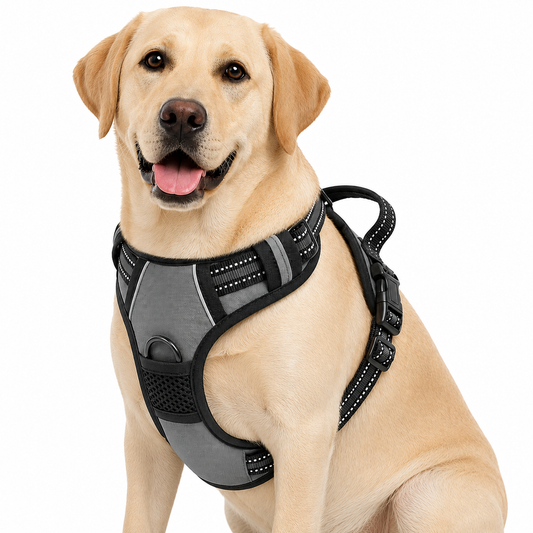
A well-fitted harness can make everyday walks more comfortable and give you a clearer way to guide your dog. The best choice depends on your dog's body shape, walking habits, and the kind of control you need.
Start with the purpose
Before comparing materials or colors, decide where and how the harness will be used. A lightweight everyday harness may suit relaxed neighborhood walks, while a more structured design may be useful for active outings or dogs that need additional control.
Measure before choosing a size
Use a soft measuring tape around the widest part of the chest, usually just behind the front legs. Check the product size chart rather than relying only on breed or weight. Dogs of the same breed can have different proportions.
Check the fit
- The straps should lie flat without twisting.
- You should usually be able to slide two fingers beneath the straps.
- The harness should not rub the armpits or press against the throat.
- Your dog should be able to walk, sit, and lie down normally.
Front clip or back clip?
A back attachment is simple for many everyday walks. A front attachment can offer additional directional control, but it should be introduced gradually and used with a leash and handling technique appropriate for your dog.
Recheck after the first walks
Movement can reveal looseness or rubbing that is not obvious indoors. Inspect the fit after a short walk and adjust as needed. Replace the harness if stitching, buckles, or webbing become damaged.
For persistent pulling, fear, pain, or movement problems, ask a qualified veterinarian or trainer for individual guidance.




Leave a comment
Share a helpful thought or experience with other pet owners.