


An emergency is a difficult time to discover that a carrier does not close, a prescription has run out, or a pet's microchip information is outdated. A prepared kit keeps essential supplies together and supports a faster departure during severe weather, fire, evacuation, or another unexpected disruption.
The kit should match your household, location, pets, and likely risks. A dog, cat, bird, reptile, and small mammal will not need identical supplies, so use this checklist as a starting point and review the plan with your veterinarian.
Quick answer
Prepare a portable kit with water, food, medications, copies of veterinary and identification records, a recent photo, a secure carrier or restraint, sanitation supplies, and basic comfort items. Keep emergency contacts and evacuation destinations with the kit. Check expiration dates, update documents, and practice loading each pet before an emergency occurs.
Start with an evacuation plan
Identify more than one place you could go with your pets. Confirm the current policies of hotels, shelters, boarding facilities, relatives, or friends rather than assuming every location accepts animals during an emergency.
Plan how every pet will leave the home. Each cat and small pet should have an appropriate secure carrier. Dogs should have a secure leash, collar or harness, and identification. Larger or less common animals may require specialized transport that must be arranged in advance.
Choose a household contact who can help if you are away. Share written instructions, access information, veterinary contacts, and the location of carriers and supplies.
Food and water
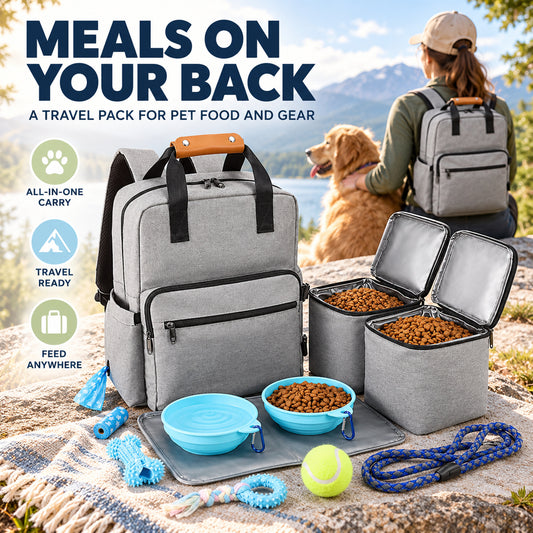
Pack an emergency supply of your pet's usual food in a sealed, waterproof container. Include a manual can opener if needed and portable bowls that can be cleaned easily. Rotate stored food before it expires rather than leaving it untouched for years.
Store water for the pets in addition to the household's human supply. The appropriate amount depends on species, size, diet, weather, health, and the length of the emergency. Ask your veterinarian about special needs.
Avoid making an abrupt diet change during an already stressful event. If your pet uses a prescription diet, include it in the rotation plan.
Medications and medical information

Keep an extra supply of essential medication when your veterinarian and local rules allow. Store it in the original labeled container and protect it from moisture and extreme temperatures. Some medications require refrigeration or special handling, so make a written backup plan.
Include copies of:
- Current vaccination and medical records
- Medication names, doses, and schedules
- Allergy and health-condition information
- Your veterinarian's contact details
- The nearest emergency veterinary hospital
- Microchip number and registration contact
- Feeding and care instructions
Keep paper copies in a waterproof pouch and secure electronic copies where they can be reached if your phone or home internet is unavailable.
Identification and recent photos
Each pet should have appropriate current identification. Check that tags are readable and that microchip registration lists the correct phone number and address.
Add recent clear photos of each pet, including at least one photo showing you with the pet. Record distinctive markings, approximate weight, species, breed or description, and any handling concerns. These details can help document ownership and support a search if you become separated.
Carriers, leashes, and safe handling

Store carriers where they can be reached quickly rather than behind heavy boxes. Check doors, latches, handles, ventilation, and fasteners. Label each carrier with the pet's name and your current contact information.
Practice voluntary carrier entry and short calm sessions before the carrier is needed. During an evacuation, stress can make pets hide or resist handling even when they normally cooperate.
Pack a backup leash, collar or harness when appropriate. Do not rely on holding a frightened pet in your arms near an open vehicle or door.
Sanitation and cleaning supplies
Include supplies appropriate for the species:
- Waste bags and trash bags
- A compact litter box and litter for cats
- Paper towels and disposable gloves
- A mild cleaning product suitable for the intended use
- Absorbent pads or bedding
- A scoop and sealable waste container
Keep pets away from cleaning products and follow label directions. Never mix household chemicals.
First aid and comfort items
A pet first-aid kit can support safe transport and temporary care, but first aid is not a replacement for veterinary treatment. Ask your veterinarian which supplies and written instructions are appropriate for your pets and learn how to use them before an emergency.
Add one or two familiar items, such as a washable blanket or durable toy, if they can be used safely. Familiar scent may help some pets settle, but essential water, medication, identification, and secure transport come first.
Information to keep outside the kit
Post a rescue alert near the entrance if it is appropriate for your home, and keep the number and type of pets current. Save local emergency-management alerts and know how authorities in your area communicate evacuation instructions.
Do not leave pets behind unless emergency officials specifically direct otherwise and no safe alternative exists. If evacuation is necessary, leave early enough to transport animals without rushing.
Maintain the kit
Review the kit on a regular schedule, such as when clocks change or at the start of severe-weather seasons. Replace expired food and medication, refresh water, confirm contacts, charge or replace batteries, and check that the carrier still fits the pet.
Update the plan after a move, adoption, new diagnosis, medication change, or change in the number of animals. Run a short practice drill so every person knows who handles each pet and which items leave first.
When to seek veterinary help
Contact a veterinarian or emergency veterinary hospital after an injury, toxic exposure, breathing problem, heat illness, collapse, repeated vomiting, uncontrolled bleeding, severe weakness, or another urgent concern. Call ahead when possible so the clinic can prepare and advise you on safe transport.
Do not give human medication or perform an unfamiliar first-aid procedure unless a veterinary professional has instructed you to do so.
Frequently asked questions
How much food and water should I store?
Needs vary by pet and emergency plan. Government guidance commonly recommends planning for multiple days, while some situations require longer stay-at-home supplies. Ask your veterinarian about the amount and storage method for your household.
Should medications stay inside the kit all year?
Some medications can be stored in a rotating emergency supply, while others require temperature control or cannot be refilled early. Follow your veterinarian's and pharmacist's instructions.
Do indoor cats need identification in an emergency?
Yes. Doors, windows, carriers, and routines can change during an evacuation. Current identification and microchip registration improve the chance of reunification if a cat escapes.
Is a car travel kit the same as an emergency kit?
They overlap, but an emergency kit also addresses evacuation destinations, disaster documents, backup medication, sanitation, prolonged disruption, and household communication. Keep the two checklists coordinated.
This article is for general educational purposes and is not a substitute for professional veterinary advice. Contact your veterinarian if you have concerns about your pet's health or behavior.
Related reading: Pair this kit with our car travel safety guide and puppy-proofing checklist.



Leave a comment
Share a helpful thought or experience with other pet owners.