
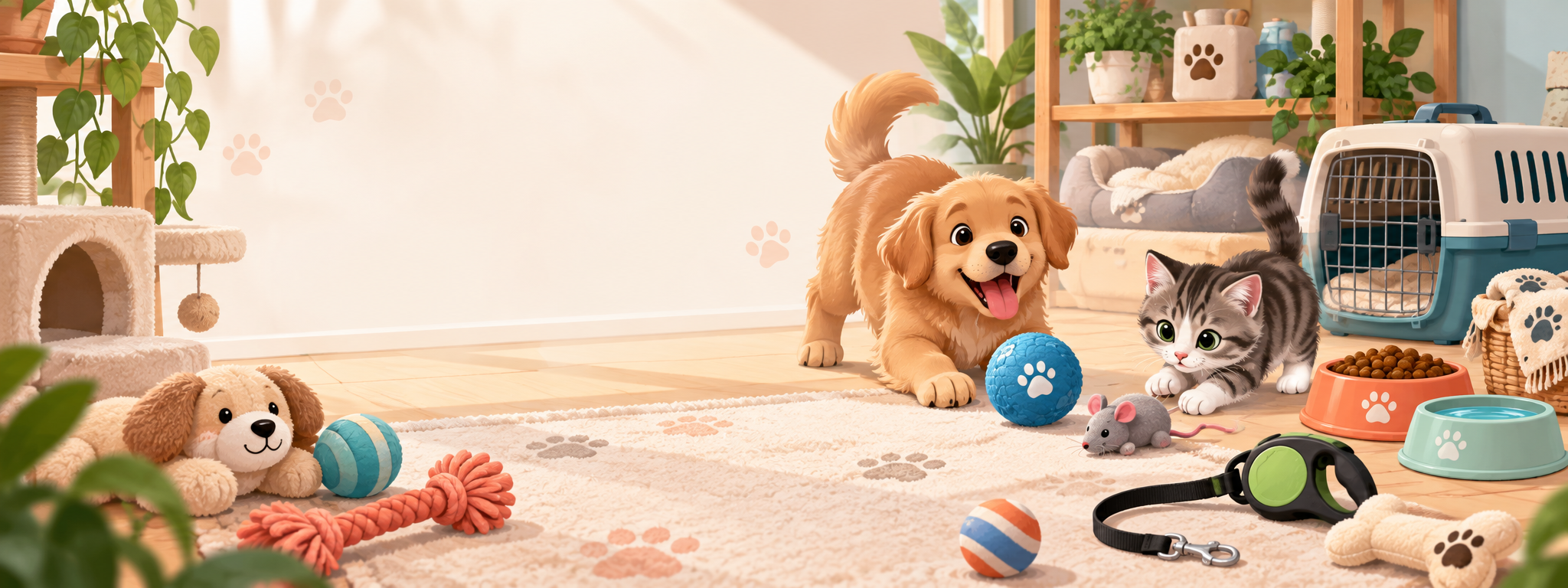

Bringing home a puppy changes how ordinary household objects need to be viewed. A dropped pill, an open trash can, a dangling cord, or a small toy under the sofa may be easy for a person to ignore but tempting for a puppy that explores with its mouth.
Puppy-proofing does not mean creating a completely empty home. It means reducing avoidable risks, controlling access while your puppy learns, and checking the environment again as the puppy grows taller, stronger, and more curious.
Quick answer
Start at floor level and inspect every room from your puppy's point of view. Secure electrical and window cords, remove small objects, close access to medications and cleaning supplies, check plants, cover trash, block unsafe rooms, and create one supervised area where your puppy can rest and play. Recheck the home regularly because a puppy's reach and chewing ability change quickly.
Before your puppy arrives
Choose a limited home base instead of giving a new puppy access to the entire house on the first day. A quiet, easy-to-clean area with water, a safe resting place, and room for supervised play can make it easier to notice what the puppy tries to chew, climb, or enter.
Decide which doors will remain closed and where gates may be useful. Test each barrier before relying on it. A gate that shifts, leaves a large gap, or can be climbed is not a dependable boundary.
Save the phone numbers for your regular veterinarian, the nearest emergency veterinary hospital, and an animal poison-control service before an accident happens. Keep your puppy's identification and microchip registration information current.
Living room and family areas
Look at the room from floor level

Kneel or sit on the floor and look under furniture, beside cushions, and behind tables. Pick up coins, batteries, rubber bands, hair ties, children's toys, plastic pieces, and anything small enough to swallow.
Check whether the puppy can reach remotes, eyeglasses, game controllers, candles, or bags left on low surfaces. Move valuable and unsafe objects rather than expecting a young puppy to ignore them.
Secure cords and window coverings
Unplug and cover electrical cords when practical, and prevent access to power strips. Shorten or secure blind cords, curtain ties, and long strings so they cannot form an entanglement hazard.
Do not leave a puppy unsupervised around a charging cable simply because it has not been chewed before. Interest can change as teething begins.
Check furniture and reclining mechanisms
Look for spaces where a puppy could become trapped under or behind furniture. Before closing a recliner, sofa bed, drawer, or storage bench, confirm that the puppy is not inside or underneath it.
Kitchen and dining area
Control food and trash access
Use a secure trash can or store it behind a closed door. Keep food, grocery bags, compost, and used food packaging away from the edge of counters. A puppy may learn to reach higher surfaces sooner than expected.
Do not assume that a food is safe because people eat it. If you are unsure whether a food is appropriate for your puppy, ask your veterinarian rather than testing a small amount.
Lock away cleaners and sharp objects

Store cleaning products, dishwasher supplies, medications, pest-control products, knives, and breakable items in closed cabinets. Consider cabinet locks if the doors can be pushed or pulled open.
Keep the puppy out of the room while a floor or surface is being cleaned, and follow the product label before allowing access again. Clean spills promptly.
Bathroom and laundry room
Store medications, vitamins, razors, dental floss, cosmetics, detergents, and cleaning products in enclosed storage rather than on a counter or low shelf. Keep laundry pods and dryer sheets completely out of reach.
Close toilet lids, waste bins, washer and dryer doors, and cabinets. Check inside laundry appliances before every use. Socks and other small clothing items can also become swallowing hazards, so use a closed hamper.
Bedrooms, offices, and children's rooms
Move medications off bedside tables. Secure charging cables and pick up earbuds, pens, craft materials, sewing supplies, and small toys. Store shoes and clothing in closed storage if your puppy is likely to chew them.
In an office, check under the desk for cable loops, power strips, staples, and dropped batteries. In a child's room, create a clear routine for putting away small toys before the puppy enters.
Plants, windows, balconies, and outdoor access
Identify every indoor and outdoor plant before allowing your puppy to reach it. Move potentially toxic plants out of the home or into a genuinely inaccessible area. Remember that fallen leaves and spilled potting material may also attract attention.
Confirm that window screens are secure and that balcony railings do not leave gaps a puppy can enter. Keep doors, pool areas, garages, and yards controlled with reliable barriers. Check fences at ground level for holes, loose boards, or spaces beneath gates.
Garages and sheds may contain antifreeze, fuels, fertilizers, tools, pesticides, rodenticides, and other hazards. Treat these spaces as restricted areas unless they have been carefully secured.
Provide safe alternatives
Puppy-proofing works best when the puppy also has appropriate things to do. Offer veterinarian-approved toys that suit the puppy's size and chewing style, and inspect them regularly for damage. Rotate a few options instead of leaving a large pile on the floor.
Supervise new items until you know how your puppy uses them. Remove anything that breaks into pieces, becomes small enough to swallow, or causes the puppy to cough, gag, or struggle.
Recheck the home as your puppy grows
A surface that was unreachable last week may become accessible after a growth spurt. Recheck counters, tables, gates, and shelves regularly. Also update the plan when teething begins, when the puppy learns to jump, or when family routines change.
Puppy-proofing supports training; it does not replace it. Reward calm behavior and appropriate chewing while preventing repeated access to unsafe items.
When to contact a veterinarian
Contact a veterinarian or animal poison-control service promptly if you think your puppy swallowed a medication, chemical, battery, toxic plant, unsafe food, or another potentially dangerous item. Do not induce vomiting or give a home remedy unless a veterinary professional specifically instructs you to do so.
Seek urgent care for trouble breathing, collapse, repeated vomiting, seizures, severe weakness, bleeding, a swollen or painful abdomen, or known ingestion of a dangerous object or substance.
Frequently asked questions
Do I need to puppy-proof every room?
You should inspect every room the puppy could enter, but you can begin by limiting access to a carefully prepared home base. Expand access gradually as supervision and training improve.
Are childproof cabinet locks enough?
They can help, but they are only one layer of protection. Store hazardous items high and enclosed, test each lock, and keep the room inaccessible when you cannot supervise.
When can I stop puppy-proofing?
There is no universal age. Continue managing the environment until your dog reliably leaves household objects alone, and keep medications, chemicals, batteries, and toxic foods secured throughout the dog's life.
What should I do if my puppy chews an electrical cord?
Disconnect power only if you can do so safely and seek veterinary advice immediately. Electrical injuries may not be obvious from the outside.
This article is for general educational purposes and is not a substitute for professional veterinary advice. Contact your veterinarian if you have concerns about your pet's health or behavior.
Related reading: Keep the preparation going with our pet emergency kit checklist.








Leave a comment
Share a helpful thought or experience with other pet owners.